


What is a Geocell?
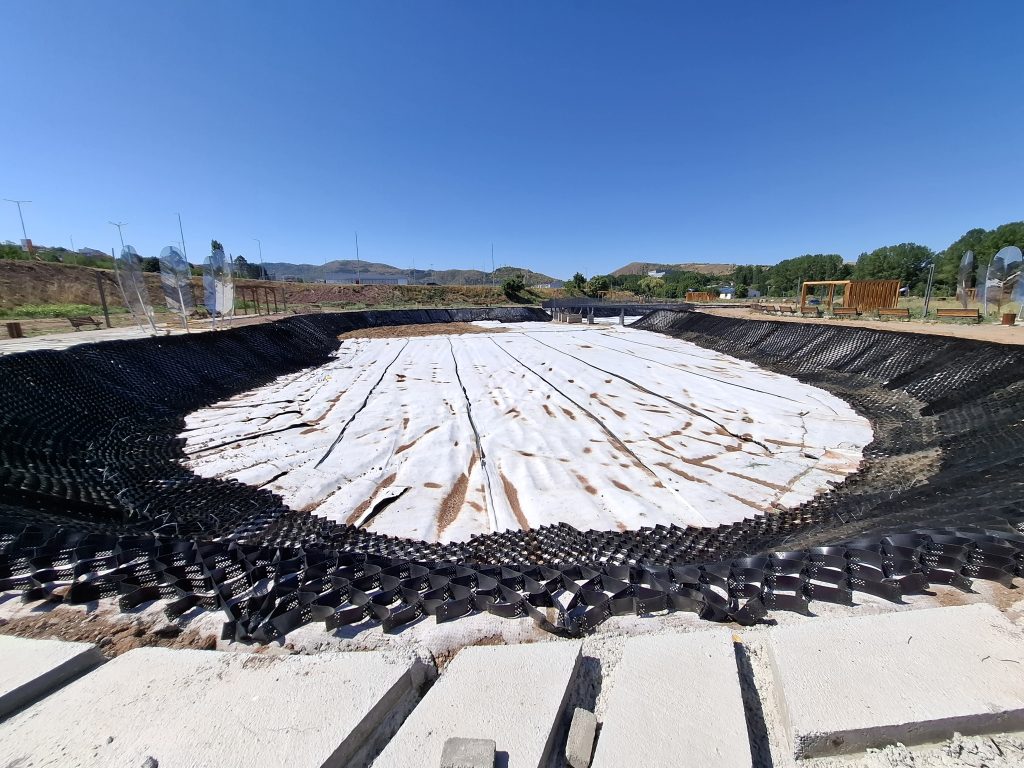
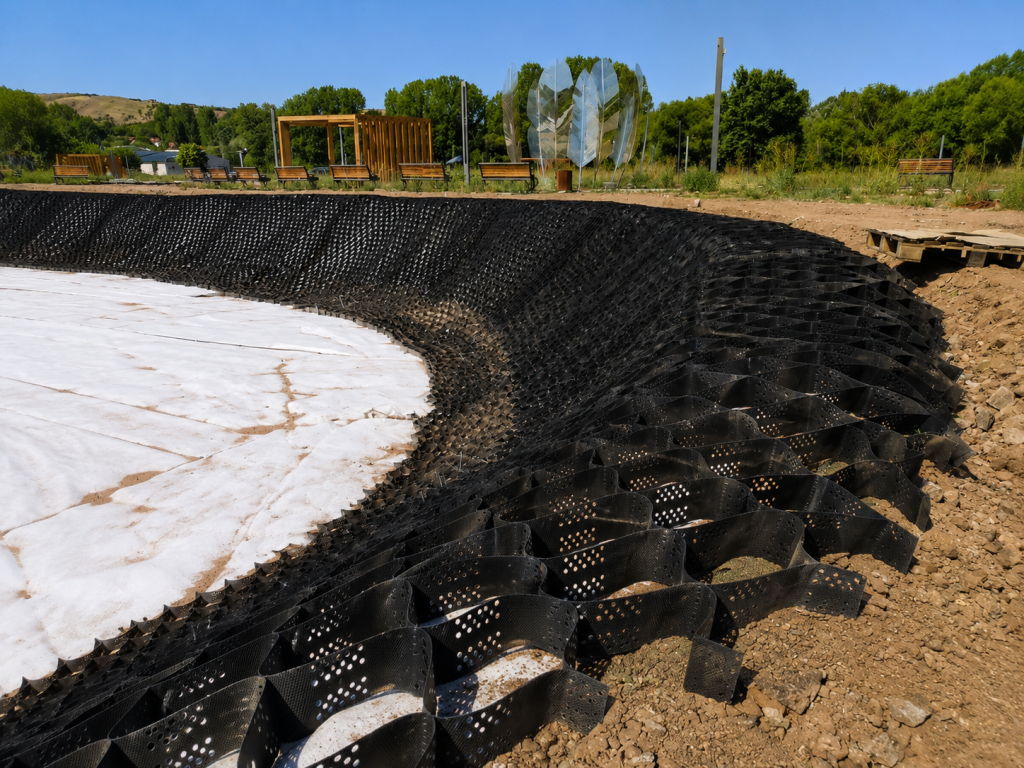
Geocell is a three-dimensional geosynthetic system made from high-quality HDPE (High-Density Polyethylene) or other polymer materials with high mechanical strength. It is compressed during transport and, upon installation, opens out into an interconnected, honeycomb-like structure of cells.
These cells are filled with various materials such as crushed stone, gravel, sand, soil or concrete, creating a stable system that restricts the horizontal movement of the material and allows for a significant improvement in the bearing capacity of the subgrade.
Due to its flexibility and durability, the geocelll is successfully applied on flat, sloped and uneven terrain, where traditional stabilisation methods often require larger quantities of material and significantly higher costs.
How does the geocelll work?
The geocelll’s principle of operation is based on restricting the movement of the material contained within the cells.
When the cells are filled, they create a stable three-dimensional structure which:
- Prevents lateral displacement of the aggregate;
- Distributes the load evenly;
- Improves the bearing capacity of the soil;
- Reduces settlement;
- Increases the stability of the structure.
Instead of the load being concentrated at a single point, it is distributed over a larger area.
. This reduces local stresses and extends the lifespan of the structure.
This principle is particularly important on soft, unstable or weakly bearing soils, where without additional stabilisation deformations can easily occur.
Main advantages of the geocell
Improved soil bearing capacity
The geocelll enables a significant increase in the bearing capacity of weak soils without the need for massive excavations or thick layers of aggregate.
Deformation reduction
Thanks to its three-dimensional structure, the occurrence of ruts, irregularities and local subsidence is reduced.
Erosion control
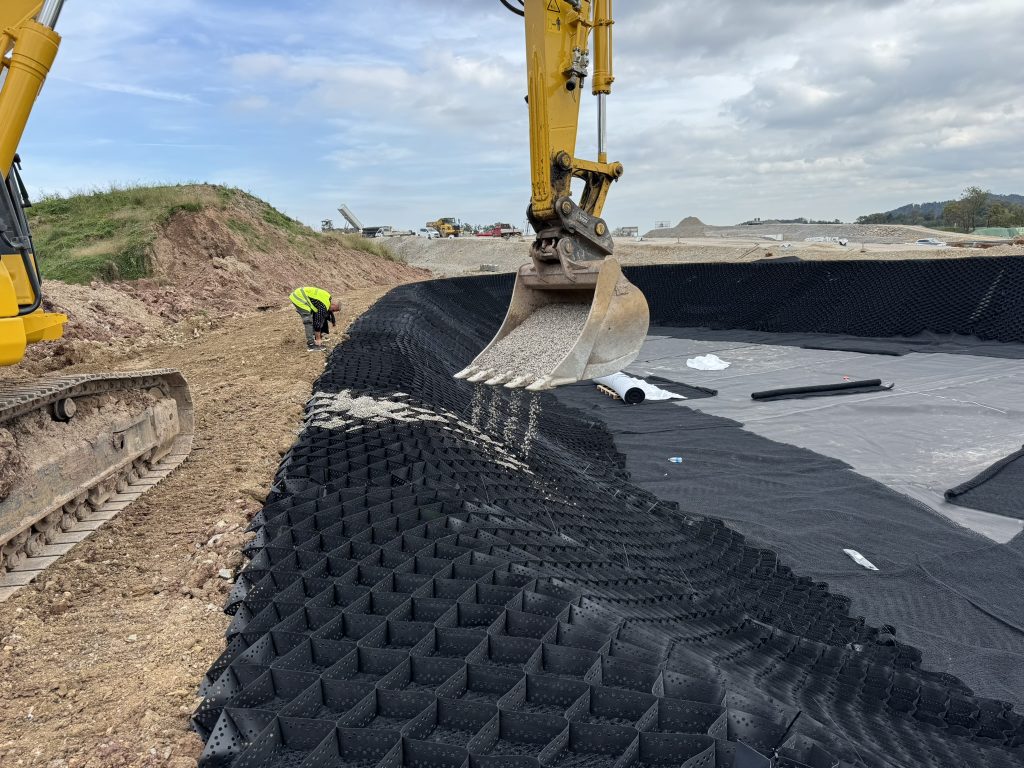
On slopes and embankments, geocell retains the soil in place and reduces the impact of rain, wind and surface water.
Reduced aggregate consumption
As the system uses the fill material more efficiently, the required quantity of crushed stone or gravel can often be reduced.
Faster construction
The installation of the geocell is relatively simple and allows for faster completion of construction work
Long-term use
HDPE material is resistant to moisture, chemicals, UV radiation and large temperature fluctuations, which ensures long-lasting performance.
Cost-effective solution
Due to reduced material quantities, faster installation and lower maintenance costs, geocell often represents a more cost-effective alternative to traditional methods.
Where is geocell used?
Thanks to its versatility, geocell is used in numerous areas of construction and infrastructure.
Road construction and reconstruction
Geocell is used for sub-base stabilisation on local, regional and main roads. Better load distribution reduces damage and extends the service life of the road structure.
Parking areas
Car parks are subject to constant dynamic loads. Geocell provides a stable sub-base, reduces the formation of ruts and ensures a longer service life.
Railway infrastructure
On railway lines, geocell improves the stability of the sub-base and helps to reduce its deformations.
Industrial platforms
In industrial complexes and logistics centres, where heavy machinery moves daily, geocell provides a reliable and stable foundation.
Access roads
Temporary or permanent access roads can be quickly constructed using geocell, even on ground with low bearing capacity.
Embankments
Geocell improves the stability of embankments and reduces the risk of settlement.
Slopes
One of the most common applications is the stabilisation of slopes, where it successfully retains the soil and reduces the risk of erosion.
Canals
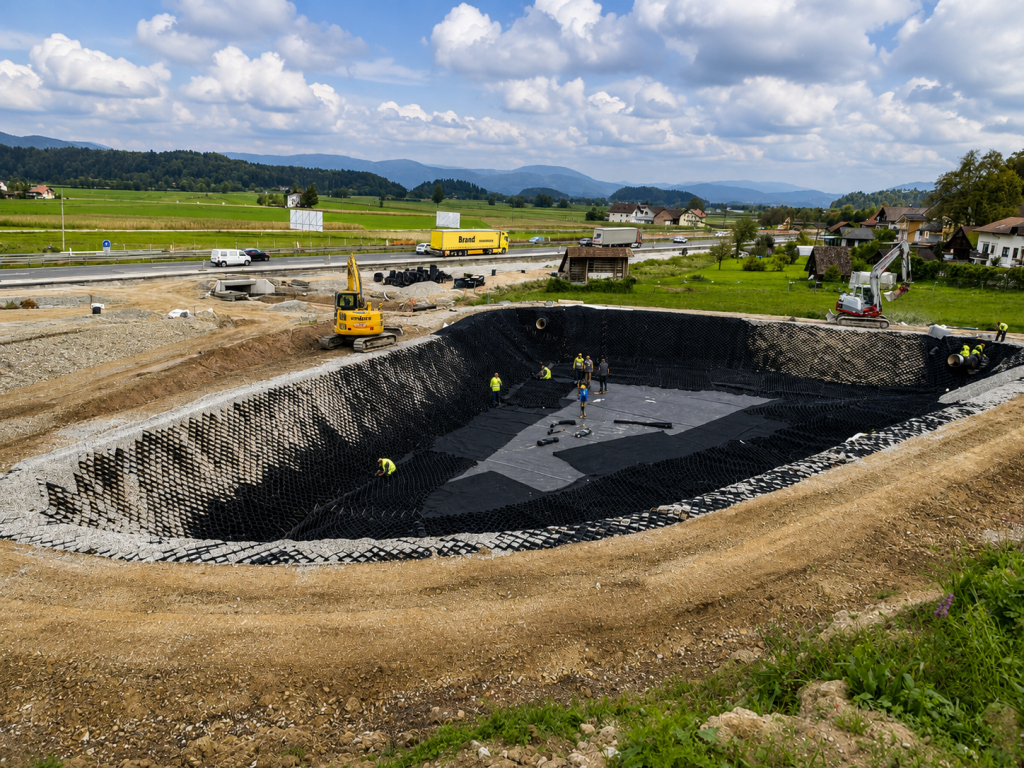
During the construction and rehabilitation of canals, geocell improves the stability of the substrate and prevents material from being washed away by the watercourse.
How is a geocell installed?
Proper installation is important for achieving maximum performance
The basic steps are:
Substrate preparation
The ground is cleared, levelled and prepared for installation.
Geocell expansion
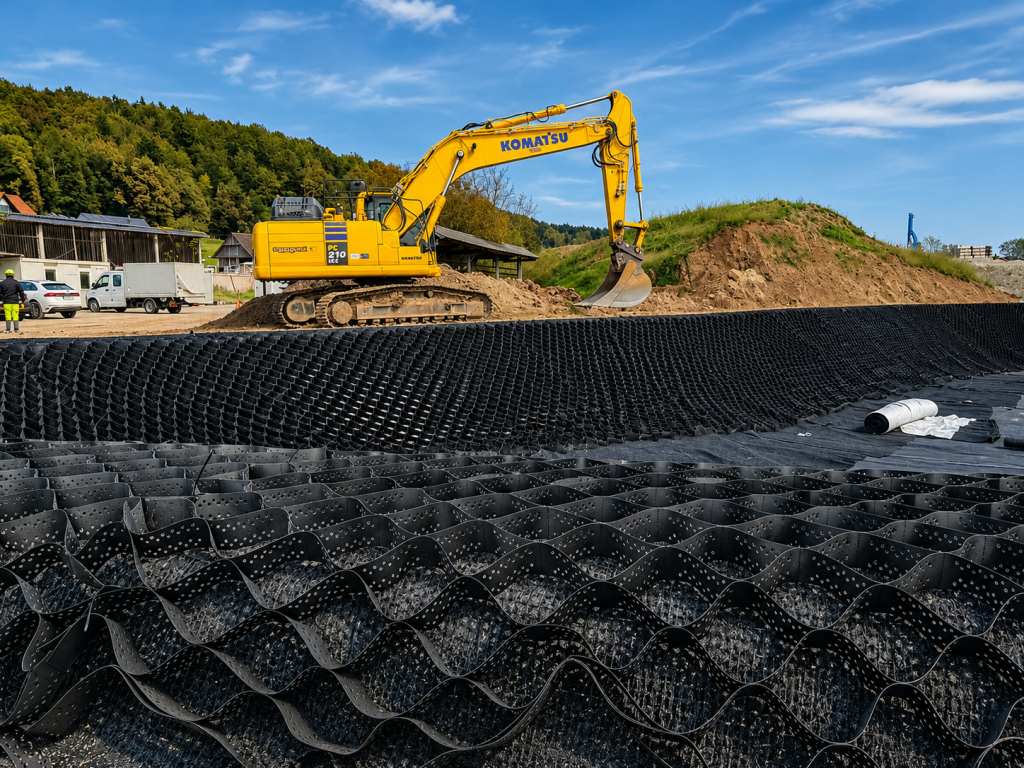
The compressed panels are expanded to the specified dimensions.
Anchoring
Depending on the slope and project requirements, the geocell is secured with anchors or stakes.
Filling
The cells are filled evenly with the specified material.
Compaction
The material is compacted using appropriate machinery to achieve the required stability.
BCA offers a complete range of geosynthetic products, as well as expert support in selecting the most suitable solution for your project’s needs.
For more information about our geosynthetic solutions, call +389 2 2031 424 or visit www.bca.mk